If you're carrying balances on more than one credit card or loan, you've probably heard the same two pieces of advice from different people: "Pay off the smallest debt first" and "Always attack the highest interest rate first." Both camps are convinced the other is wrong — and the internet has turned it into a personal finance holy war.
Here's the honest answer up front: with a typical debt load, the mathematical difference between the two methods is far smaller than most articles make it sound — often under $100. What actually costs you thousands of dollars is something else entirely: paying only the minimums.
In this guide we'll run both methods on a realistic $18,000 debt example, show you the exact numbers, and help you pick the strategy you'll actually stick with.
Try it yourself: The CalcMeter Debt Payoff Calculator lets you enter each debt's balance, APR, and minimum payment, add your extra monthly amount, and instantly compare snowball vs. avalanche side by side — no signup required.
What Is the Debt Snowball Method?
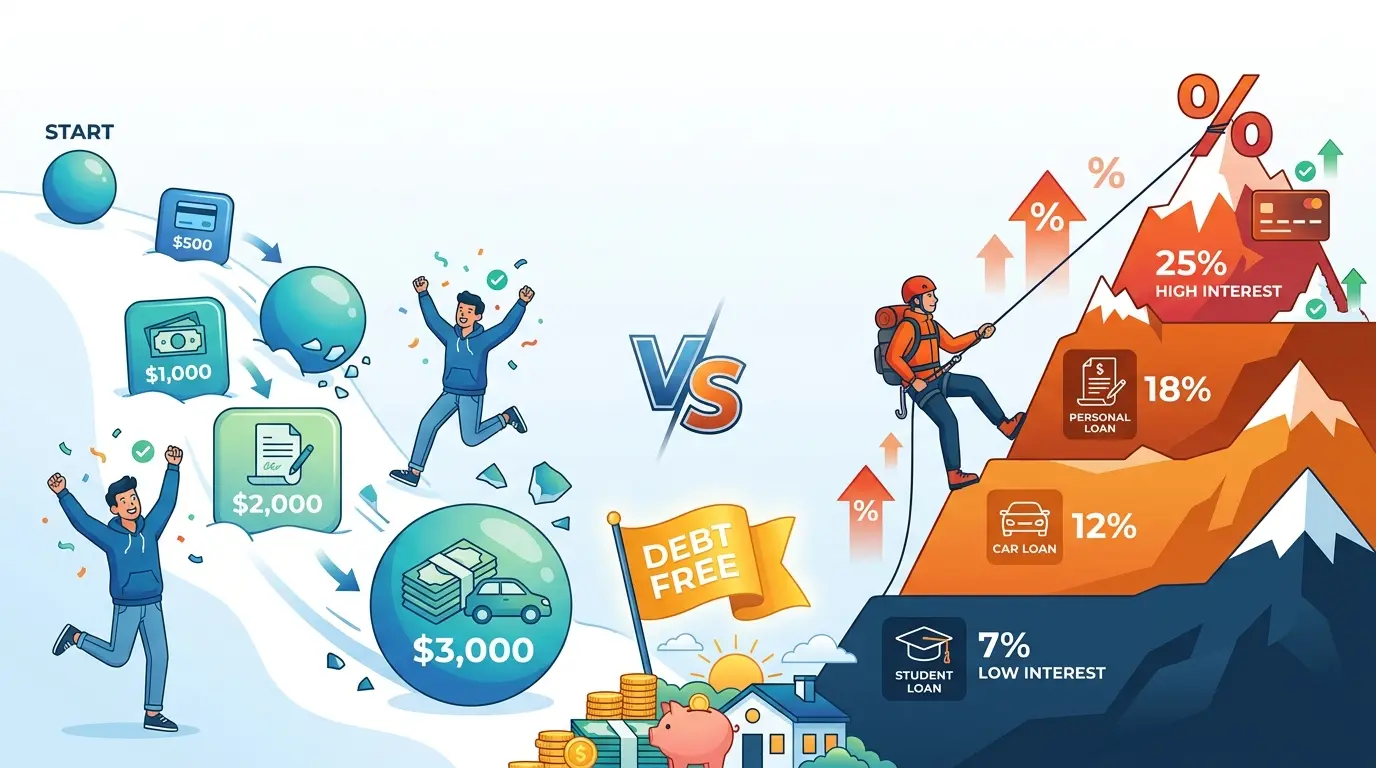
The debt snowball method, popularized by Dave Ramsey, tells you to list your debts from smallest balance to largest — ignoring interest rates entirely. You pay the minimum on everything, then throw every spare dollar at the smallest balance. When it's gone, you "roll" that payment into the next-smallest debt. Each payoff makes the next payment bigger — like a snowball picking up size as it rolls downhill.
The snowball's power isn't mathematical — it's psychological. Knocking out an entire account in a few months gives you a visible win, and visible wins keep people in the game. Research from the Harvard Business Review and a well-known Kellogg School study both found that people who concentrate payments on one small account at a time are more likely to actually finish paying off their debt than people who spread payments around.
What Is the Debt Avalanche Method?
The debt avalanche method flips the ordering: list your debts from highest interest rate to lowest, pay minimums on everything, and put every extra dollar toward the most expensive debt first. Once the highest-APR debt is gone, you move to the next-highest rate.
Mathematically, the avalanche is always the optimal strategy. Every month a 25% APR credit card sits untouched, it generates more interest than any lower-rate debt of the same size. By killing the expensive debt first, you minimize the total interest you'll ever pay.
The trade-off: if your highest-rate debt is also a large balance, your first "win" might be many months away — and that's where a lot of avalanche plans quietly die.
Real Example: $18,000 of Debt, Both Methods, Exact Numbers
Meet a debt profile that looks like millions of American households. Four debts totaling $18,000, minimum payments of $545 per month, plus an extra $250/month available to attack the debt — $795/month total:
| Debt | Balance | APR | Minimum Payment |
|---|---|---|---|
| Credit Card A | $2,500 | 24.99% | $75 |
| Credit Card B | $850 | 17.99% | $35 |
| Personal Loan | $5,650 | 12.50% | $170 |
| Car Loan | $9,000 | 6.90% | $265 |
Snowball order: Card B ($850) → Card A ($2,500) → Personal Loan → Car Loan.
Avalanche order: Card A (24.99%) → Card B (17.99%) → Personal Loan → Car Loan.
Here's what happens when we run both plans month by month:
| Debt Snowball | Debt Avalanche | |
|---|---|---|
| First debt paid off | Month 4 (Card B) | Month 9 (Card A) |
| Second debt paid off | Month 12 | Month 11 |
| Completely debt-free | Month 30 | Month 30 |
| Total interest paid | $2,224 | $2,159 |
| Avalanche savings | — | $65 |
Read that middle row again: both methods finish in 30 months. The avalanche saves $65 in interest over two and a half years — about $2.17 a month. But the snowball delivers its first victory in month 4 instead of month 9.
If an early win is what keeps you from giving up in month 6, the snowball's $65 "cost" is the best money you'll ever spend.
The Number That Actually Matters
Now compare either method against doing nothing extra — just paying the $545 in minimums every month:
| Minimums Only | Either Method (+$250/mo) | |
|---|---|---|
| Time to debt-free | 57 months | 30 months |
| Total interest paid | $4,362 | ~$2,200 |
| Difference | — | 27 months sooner, ~$2,150 saved |
The extra $250 a month matters 33× more than which method you choose. Snowball vs. avalanche saves you $65; adding $250/month saves you $2,150 and more than two years of your life. Method debates are a distraction from the real lever: how much extra you can throw at the debt each month.
Which Method Should You Choose?
Choose the debt snowball if:
- You've tried to pay off debt before and lost motivation partway through.
- You have several small balances ($200–$1,500) you could clear within a few months.
- Seeing accounts hit zero is what keeps you going — you want fewer bills, fast.
- Your interest rates are all fairly close together (the math gap shrinks to almost nothing).
Choose the debt avalanche if:
- You have one debt with a dramatically higher APR than the rest (e.g., a 29% store card next to a 7% car loan).
- Your highest-rate debt is also small — then avalanche gives you quick wins AND optimal math.
- You're motivated by spreadsheets and total-interest numbers, not by closing accounts.
- Your balances are large and timelines long — the bigger and longer the debt, the more the avalanche's savings grow.
The hybrid most people actually land on: Snowball your first one or two small debts for momentum, then switch to avalanche ordering for the rest. You get the psychological kick-start and capture most of the interest savings. In our example, that hybrid would pay off Card B in month 4, then jump to Card A — nearly identical total cost to the pure avalanche.
How to Run Your Own Numbers in 60 Seconds
Every debt profile is different — the gap between methods grows when your rates are far apart and your balances are large. Our free Debt Payoff Calculator lets you enter each debt's balance, APR, and minimum payment, add your extra monthly amount, and instantly compare snowball vs. avalanche side by side: payoff date, total interest, and month-by-month schedule. No signup, no email — the math runs in your browser.
- 1List every debt with its current balance, APR, and minimum payment (check your latest statements).
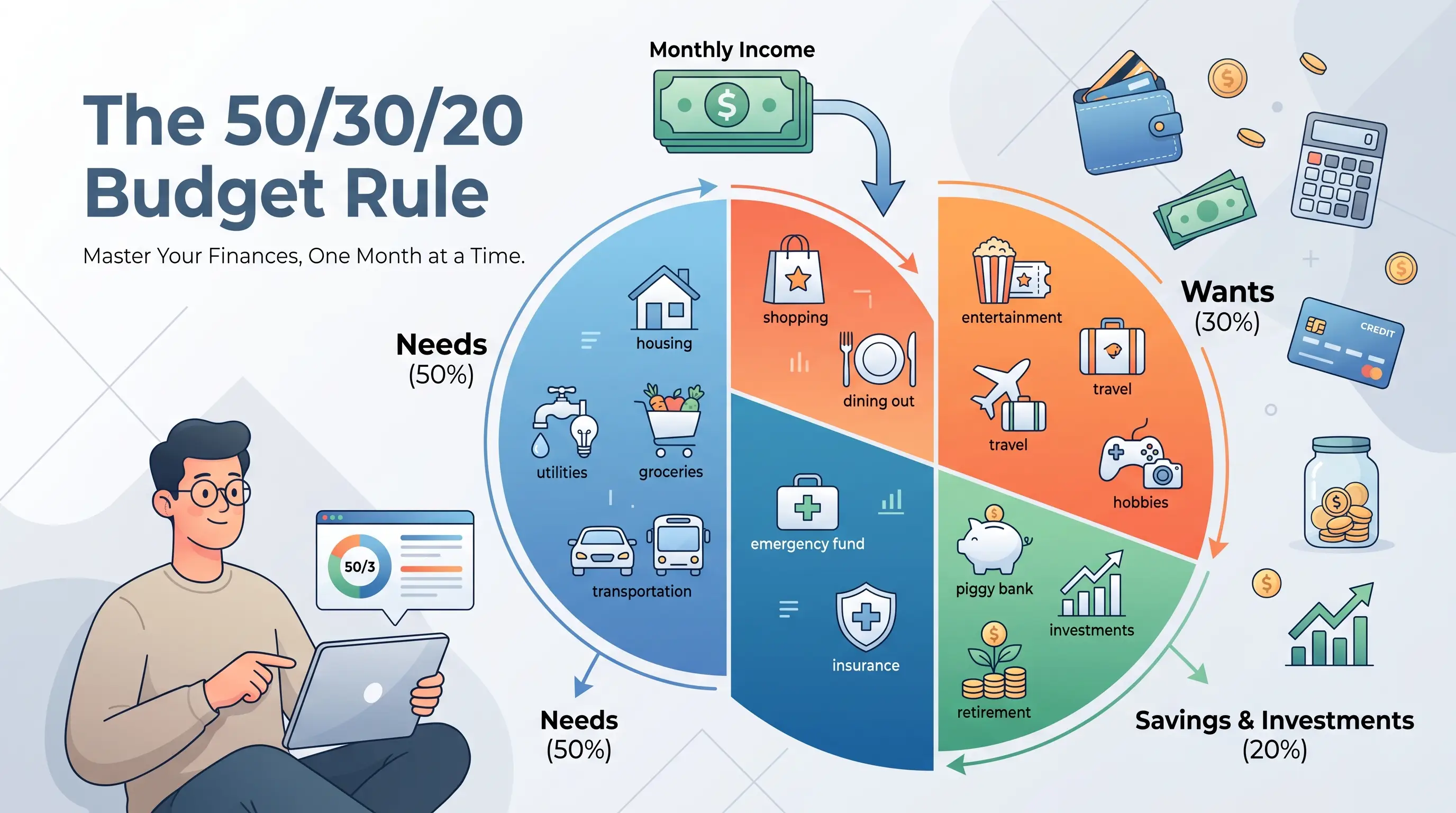
- 2Decide your extra monthly amount — even $50 changes the picture. Not sure what you can spare? Run the 50/30/20 rule on your income first to find your savings number.
- 3Compare both methods in the calculator and pick the one whose first milestone excites you.
- 4Automate it. Set the extra payment to auto-pay the day after your paycheck lands so the decision only happens once.
Compare both methods on your actual debt
Enter your balances, APRs, and extra monthly payment — get your exact payoff date, total interest, and a month-by-month schedule for both snowball and avalanche instantly.
Open Debt Payoff CalculatorThree Mistakes That Break Both Methods
1. Adding new debt while paying off old debt
If the card you just paid off goes back to a balance, the snowball rolls uphill. Freeze or delete the card from your phone's wallet until you're completely debt-free. The discipline here is behavioral, not mathematical.
2. Skipping the starter emergency fund
Without even $500–$1,000 in savings, the first car repair goes straight onto a credit card and undoes months of progress. Build the mini-fund first, then attack the debt. This is a universal recommendation across financial planners — the emergency fund is not optional.
3. Ignoring 0% balance transfer offers
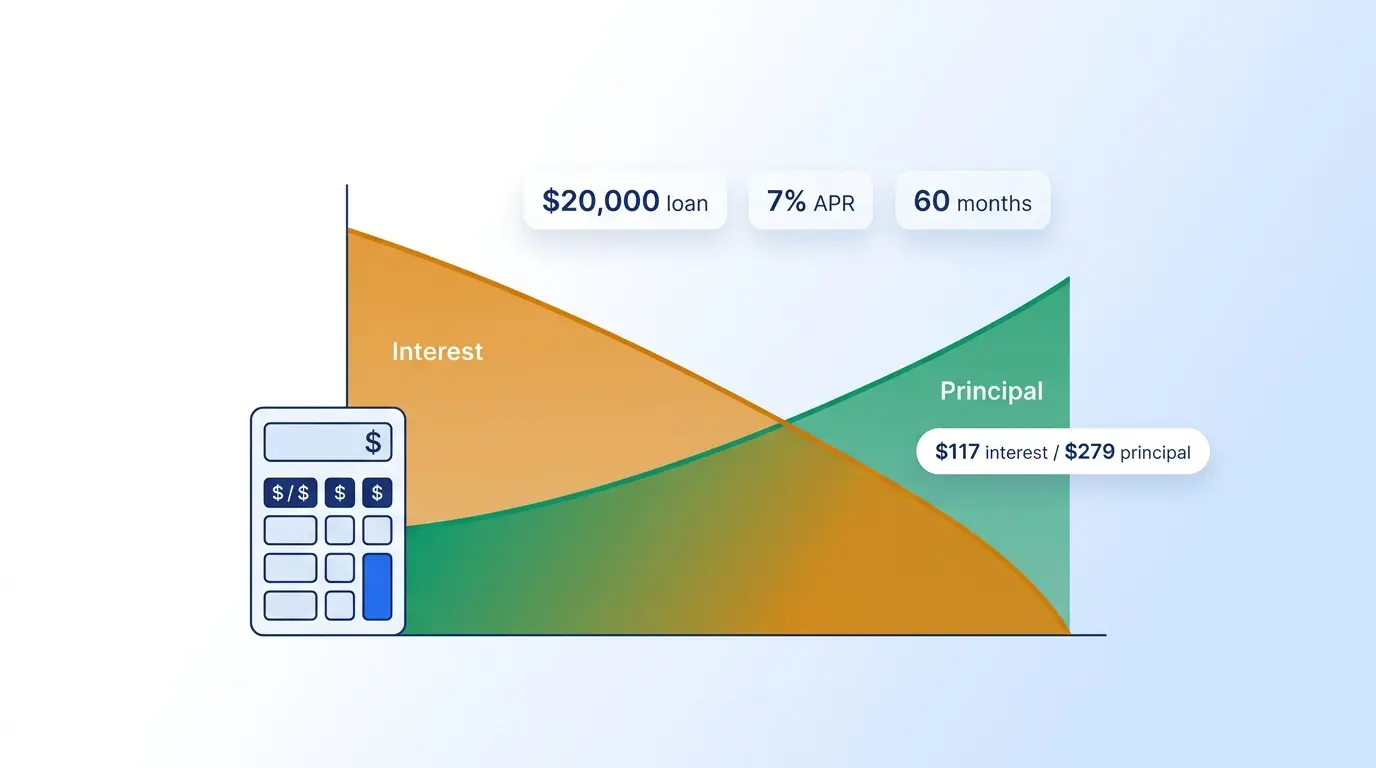
If you have good credit, moving a 25% APR balance to a 0% intro card (typically 12–21 months, 3–5% transfer fee) can save more than either payoff method. Just do the math on the fee, make sure you can clear the balance before the intro period ends, and never treat the transfer as "paid off." Understanding how APR and interest accrual work helps you evaluate these offers accurately.
Frequently Asked Questions
Mathematically, the highest interest rate first (avalanche) always costs less — but often by a surprisingly small amount. In our $18,000 example the difference was just $65 over 30 months. If early wins keep you motivated, paying the smallest balance first (snowball) is the better choice, because the best method is the one you finish.
Usually it isn't faster at all — with the same monthly payment, both methods typically finish within the same month or two. The avalanche saves money on interest rather than time. The gap grows only when your interest rates are far apart and balances are large.
Yes — studies from Harvard Business Review and Northwestern's Kellogg School found that people who concentrate on one small debt at a time are more likely to eliminate their debt entirely than those who spread payments evenly. Its power is completion rate, not interest savings.
Build a small starter emergency fund first — typically $500 to $1,000 — so a surprise expense doesn't land on a credit card. After that, most experts recommend attacking high-interest debt (anything above ~8%) before investing beyond an employer 401(k) match.
Increase the amount you pay each month — that matters far more than payment order. In our example, an extra $250/month cut the payoff time from 57 months to 30 and saved about $2,150 in interest. Pair that with either the snowball or avalanche method and, if your credit allows, a 0% balance transfer.
No — both methods pay at least the minimum on every account on time, which protects your payment history (35% of your FICO score). As balances fall, your credit utilization drops, which typically improves your score over the course of the payoff.